
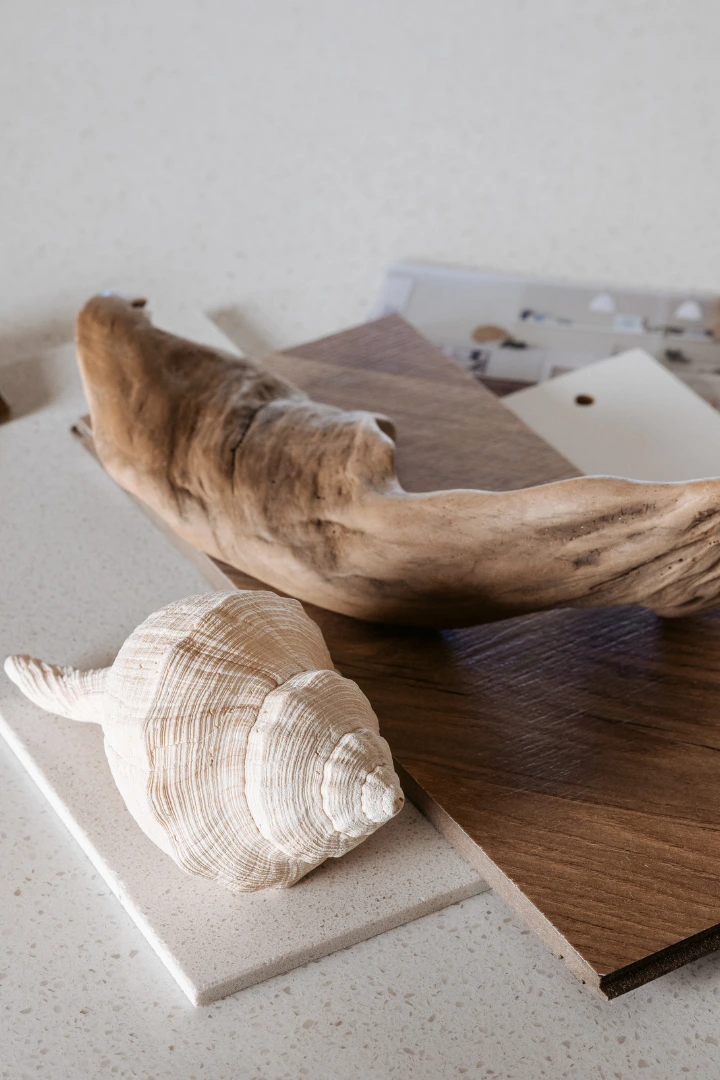
Kitchen benchtop materials chosen for the way you cook.
You touch, wipe, heat and lean on your benchtop every day. That is why choosing the right kitchen benchtop materials depends less on how they look in a showroom and more on how you cook. It also depends on how light moves through your home, and how each surface will feel in ten years.
At Design Suite Kitchen Design, we select kitchen benchtop materials for homes across Tauranga, Mount Maunganui, Papamoa, Te Puke and the wider Bay of Plenty. We match every benchtop to your budget and your home rather than choosing from a catalogue. As a result, it suits the house it sits in and holds up to daily life.
How do you choose kitchen benchtop materials?
Choose kitchen benchtop materials in order of how hard they work. First, think about how you cook and clean. Next, consider the light and climate of your home, then how much care each surface needs. Colour and character then come last, once you know which materials will genuinely suit daily life.
However, most people choose the other way round. They fall for a colour first, and the practical questions arrive later, often after ordering. Working through function first means the materials you love will also perform.
Four questions guide every material selection:
How will you use this surface, and who will use it?
How does the light in this room change through the day?
What will salt air, sun and humidity do to it over time?
How much care does it need, and is that realistic for your household?
This is also the second stage of the Design Suite process. Stage one resolves layout, workflow and how the kitchen connects to your home (link: how your kitchen layout is designed).
Stage two then resolves character: colour, material, texture and how they layer together. We keep the two deliberately separate, so neither compromises the other.
Which benchtop material is right for your kitchen?
The right benchtop depends on how you cook. Granite and sintered stone, for example, handle heat and wear with little care. Engineered stone is easy to live with but needs protecting from hot pans. Timber brings warmth with more upkeep, while laminate suits tighter budgets.
Kate's years as a chef also shape how we choose. Often the answer is two materials: a hard-wearing surface around the cooktop and sink, and a feature on the island, such as timber or a statement slab of granite or sintered stone.
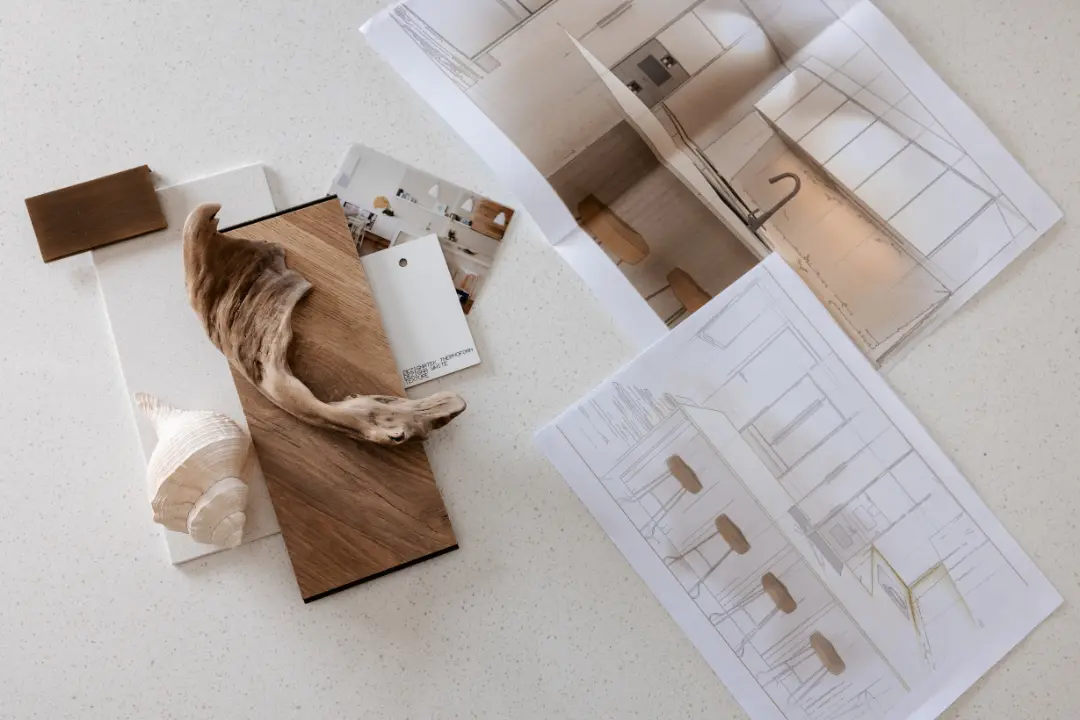
Kitchen benchtop materials compared
Choose a material to see how it performs day to day and where it sits on budget. Every material here can suit the right kitchen, so start with how you cook.
Granite
Durability
5 out of 55 / 5
Budget
Upper to premiumUpper to premium
Stainless steel
Durability
5 out of 55 / 5
Budget
Upper to premiumUpper to premium
Textured finishes, however, sit at the upper end
Porcelain or sintered stone
Durability
4 out of 54 / 5
Budget
Upper to premiumUpper to premium
Priced in tiers, so the design sets the price
Engineered stone
Durability
4 out of 54 / 5
Budget
Moderate to premiumModerate to premium
Around five price tiers, because colour and pattern set the price
Timber, hi-build resin
Durability
4 out of 54 / 5
Budget
Moderate to upperModerate to upper
Solid surface
Durability
3 out of 53 / 5
Budget
Moderate to upperModerate to upper
Timber, natural oil
Durability
3 out of 53 / 5
Budget
Moderate to upperModerate to upper
Laminate
Durability
2 out of 52 / 5
Budget
EntryEntry
How granite performs
- Heat
Excellent
- Water
Good once sealed
- Scratches
Excellent
- Chips and knocks
Good
- Porous
Slightly, but sealing protects it
- Staining
Good once sealed
- Care
Periodic sealing
- Character
Natural variation, so no two slabs are alike
How stainless steel performs
- Heat
Excellent
- Water
Excellent
- Scratches
Brushed shows fine scratches, while an orbital finish disguises them
- Chips and knocks
Excellent, but can dent
- Porous
No
- Staining
Excellent
- Care
Low
- Character
Professional and hygienic
How porcelain or sintered stone performs
- Heat
Excellent
- Water
Excellent
- Scratches
Excellent
- Chips and knocks
Low to moderate, because edges and corners can chip
- Porous
No
- Staining
Excellent
- Care
Low
- Character
Thin, crisp profiles in stone and concrete looks
How engineered stone performs
- Heat
Moderate, because the resin can scorch
- Water
Excellent
- Scratches
Good
- Chips and knocks
Moderate, since edges can chip
- Porous
No
- Staining
Good
- Care
Low
- Character
Consistent colour and pattern
How resin-coated timber performs
- Heat
Moderate, so use a trivet
- Water
Good, suits undermount and butler's sinks
- Scratches
Good
- Chips and knocks
Good
- Porous
No, because it is sealed under the resin
- Staining
Excellent
- Care
Low
- Character
Timber grain under a 30% or 10% gloss
How solid surface performs
- Heat
Low to moderate
- Water
Excellent
- Scratches
Low, but repairable
- Chips and knocks
Good, also repairable
- Porous
No
- Staining
Good
- Care
Low
- Character
Smooth, near-invisible joins, integrated sinks possible
How oiled timber performs
- Heat
Moderate, but marks with direct heat
- Water
Low to moderate, so it needs regular oiling
- Scratches
Low, but repairable on site
- Chips and knocks
Dents rather than chips, so it is repairable
- Porous
Yes, although regular oiling reduces absorption
- Staining
Moderate
- Care
Re-oil 4 to 6 times a year
- Character
Warm, natural feel that ages with use
How laminate performs
- Heat
Low
- Water
Low, because joins and sink cut-outs can swell
- Scratches
Moderate
- Chips and knocks
Good, resists knocks without chipping
- Porous
No at the surface
- Staining
Good
- Care
Low
- Character
Wide range of colours and patterns
Durability is an overall score out of 5 for everyday heat, water, scratches, knocks and staining. Budget compares relative cost for the same size of benchtop, from $ (entry) to $$$$ (premium), including fabrication. Gold shows how far the range can reach. It is, however, a guide rather than a quote.
What else matters when choosing kitchen benchtop materials?
Beyond the material itself, a benchtop is also shaped by how it handles water, where it sits on the price tiers, its finish and how its edges and joins are detailed. Together, these details decide how the benchtop looks up close and how well it wears over the years.
Water, staining and price tiers
Porcelain and sintered stone are close relatives. Both are made by firing natural minerals at very high temperatures, so they resist heat and stains equally well. Porous materials such as oiled timber absorb liquids, so they stain more easily unless sealed and cared for.
Around the sink and dishwasher, porcelain, sintered stone, stainless steel and resin-coated timber handle water well. By contrast, oiled timber and laminate edges are better kept away.
Engineered stone, porcelain and sintered stone are also sold in price tiers. Plain colours usually sit lower, while detailed veining and larger slabs sit higher, so two benchtops in the same material can be several tiers apart. We then guide you to the tier that suits your budget and the way you cook.
Stainless steel finishes
Stainless steel is not one look. A brushed finish, for example, is the familiar professional surface, and it shows fine scratches as it settles into a patina.
Textured finishes, such as a linen pattern, scatter the light across the surface. They reflect less glare than brushed steel, disguise fingerprints and everyday scratches, and give the steel a softer, more crafted character.
We also specify solid plate stainless steel for a slim, crisp edge. Textured and plate ranges usually sit at the upper end of the budget scale.
Solid surface (acrylic) finishes
Acrylic solid surface, such as HI-MACS, is a smooth, non-porous material that can be shaped into curves. Pieces are bonded with a colour-matched adhesive and sanded flush, so long runs and corners show almost no join, unlike the visible join line in stone or laminate.
A sink can be moulded from the same material, so the benchtop and sink read as one, with no rim to clean around.
Scratches and small marks can be sanded out, although hot pans need a trivet. Overall, it sits in the middle of the budget scale.
Thickness, edges and joins
Equally, how you detail a benchtop matters as much as the material. For instance, a slim 12mm porcelain edge reads very differently to a 40mm mitred stone edge.
Porcelain and sintered stone are very hard, but their edges and corners can chip. For that reason, we detail them with a slightly eased edge and keep exposed corners away from busy walkways.
Likewise, a waterfall end changes how an island sits in the room. We plan join positions in the design, so they fall where they are least visible.
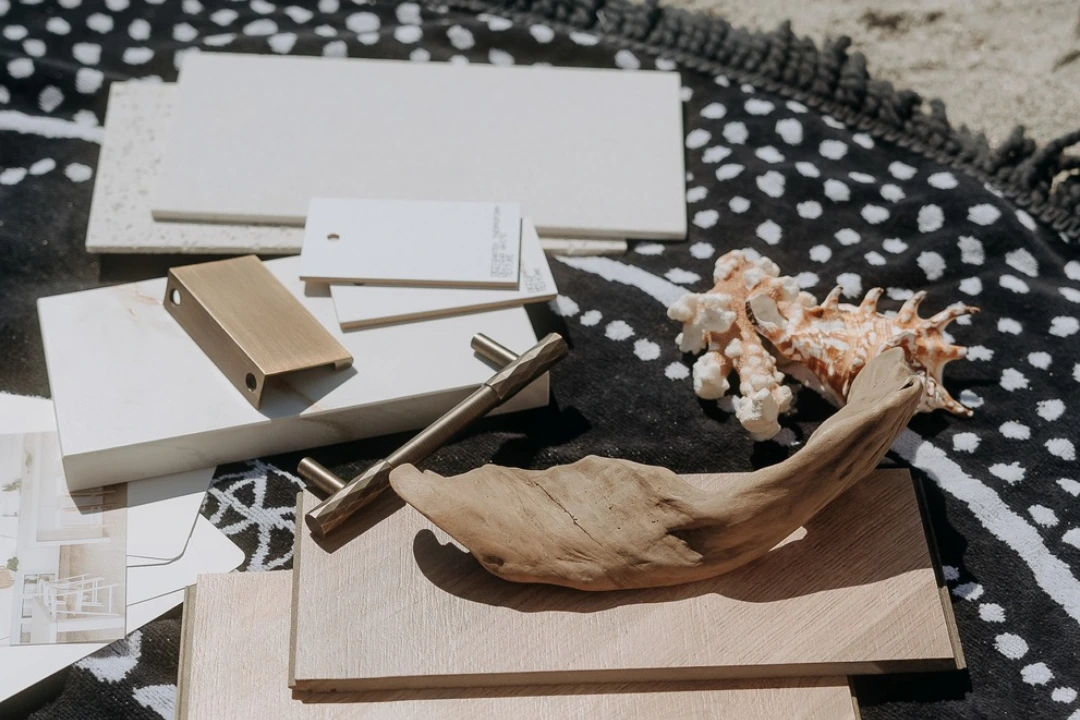
Timber benchtops and their finishes.
A timber benchtop brings a warmth that stone cannot, and its finish decides how it lives day to day. Hi-build resin, for example, gives the toughest, lowest-maintenance surface, even around an undermount or butler's sink.
Natural oil keeps the most natural feel but needs re-oiling several times a year. Two-pack lacquer, however, suits low-wear areas only.
So choose the finish by where the timber sits. Around a sink or cooktop, where water and heat do the most work, hi-build resin gives the most protection. On an island or servery, where the timber is touched more than worked, natural oil keeps its texture under your hand.
Timber finishes compared
| Finish | Protection | Around a sink | Care | Look | Warranty |
|---|---|---|---|---|---|
| Hi-build resin | 2 to 3mm pour-on coat, the most protective | Yes, suits undermount and butler's sinks | Everyday cleaning | 30% gloss, or 10% for a more matt look | 10 years |
| Natural oil | Soaks into the timber and seals it | Possible, but needs regular oiling | Re-oil 4 to 6 times a year, but marks can be sanded and re-oiled on site | The most natural feel and grain | 5 years |
| Two-pack lacquer | Thin coat, so it marks with scratches and knocks | No, so keep it to low-wear areas | Low, when used in the right place | 30% gloss, or 10% for a more matt look | 5 years |
Warranties are provided by our timber benchtop supplier.
Engineered stone and sintered stone.
Engineered stone is crushed quartz bound with resin, so it gives consistent colour and a wider price range.
Sintered stone and porcelain, however, are fired at very high temperatures with no resin. As a result, they won’t fade or yellow in strong sun, and they cope with heat and sudden temperature changes far better than resin-based surfaces.
Their edges need careful detailing, but both suit a busy family kitchen.
For most of our kitchens, then the choice comes down to these two. Engineered stone suits a kitchen where budget matters, and it also gives the widest choice of plain, consistent colours.
Sintered stone, on the other hand, suits a kitchen that works hard around the cooktop, sits in strong north or west light, or calls for a thinner, crisper edge.
Engineered stone finishes
| Finish | Look and feel | Marks | Care | Suits |
|---|---|---|---|---|
| Polished | Gloss that reflects light, so colour reads at its richest | Fingerprints show less, but fine scratches can catch strong light | Everyday wipe with a soft cloth | Busy family kitchens and deeper colours |
| Honed | Soft, low sheen with a calmer stone look | Oily fingerprints and grey marks from pots show more readily | Wipe more often, then use a stone cleaner for metal marks | Contemporary kitchens and lighter colours |
| Textured | Tactile surface, such as a leathered or concrete finish | Hides fine marks, but spills can settle into the texture | Clean with a soft cloth or brush | Islands and feature benches |
Not every colour is available in every finish.
Sintered stone and porcelain finishes
| Finish | Look and feel | Marks | Care | Suits |
|---|---|---|---|---|
| Polished | High gloss with deep, clear colour | Resists stains, but smudges show more on darker colours | Everyday wipe with a soft cloth | Feature islands and splashbacks |
| Matt | Soft, natural stone or concrete look | Grey marks from pots can show, but a non-abrasive cleaner removes them | Everyday wipe | Hard-working benches around the cooktop and sink |
| Textured | Tactile surface with the feel of stone or timber | Hides fine marks well | Clean with a soft cloth or brush | Islands, and outdoor kitchens in full sun |
Not every design is available in every finish or thickness.
Why edges matter in sintered and engineered stone.
Most sintered stone ranges, however, carry their design on the surface, over a plain coloured body. A standard polished edge therefore shows a flat band of colour rather than the pattern. If you want the pattern to wrap the edge, we mitre it instead.
By contrast, its colour and pattern run through the quartz, so the edge matches the face and a small chip is less noticeable.
Thickness changes the look too: 12mm gives a slim, crisp profile, while 20mm reads as more substantial.
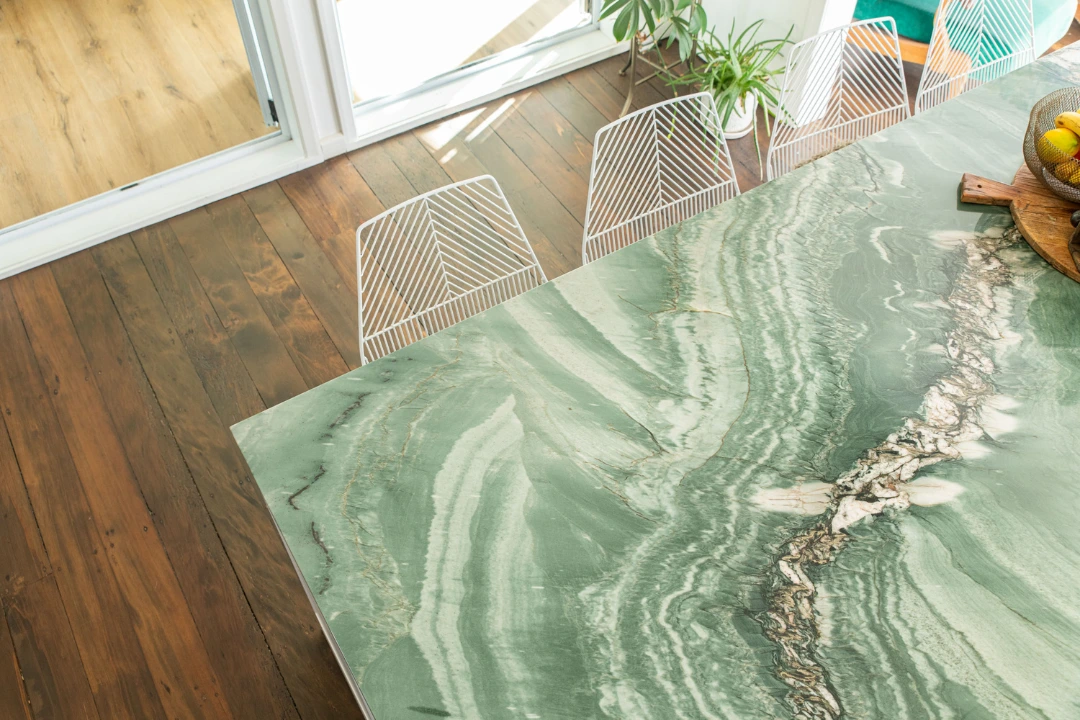
Granite and natural stone.
Granite is still a popular choice. No two slabs are alike, and once sealed it handles heat, water and daily wear very well. Marble, by contrast, marks with acids such as lemon and wine, so we avoid it on a working bench.
It also comes polished, honed or leathered, and a leathered finish softens the shine while hiding everyday marks. Price depends on the stone’s rarity and slab size, so two granites can sit far apart on the budget scale.
Granite finishes
| Finish | Look and feel | Marks | Care | Suits |
|---|---|---|---|---|
| Polished | High shine that deepens the colour and veining | The most stain-resistant finish, although smudges show more on darker stone | Everyday wipe, then reseal as advised | Busy family kitchens and stone with strong movement |
| Honed | Smooth, matt surface with a softer stone look | Oily marks and spills show more readily | Wipe spills promptly, and also seal more often | Contemporary kitchens and rooms with strong light |
| Leathered | Low sheen with a tactile, gently textured surface | Hides fingerprints, water spots and everyday marks | Clean with a soft cloth or brush | Islands and hard-working benches |
Not every stone is available in every finish.
Selecting your granite slab in person.
Because natural stone varies, we choose the slab with you in person in Auckland. We then check the veining and any natural fissures before planning the cooktop and sink cut-outs.
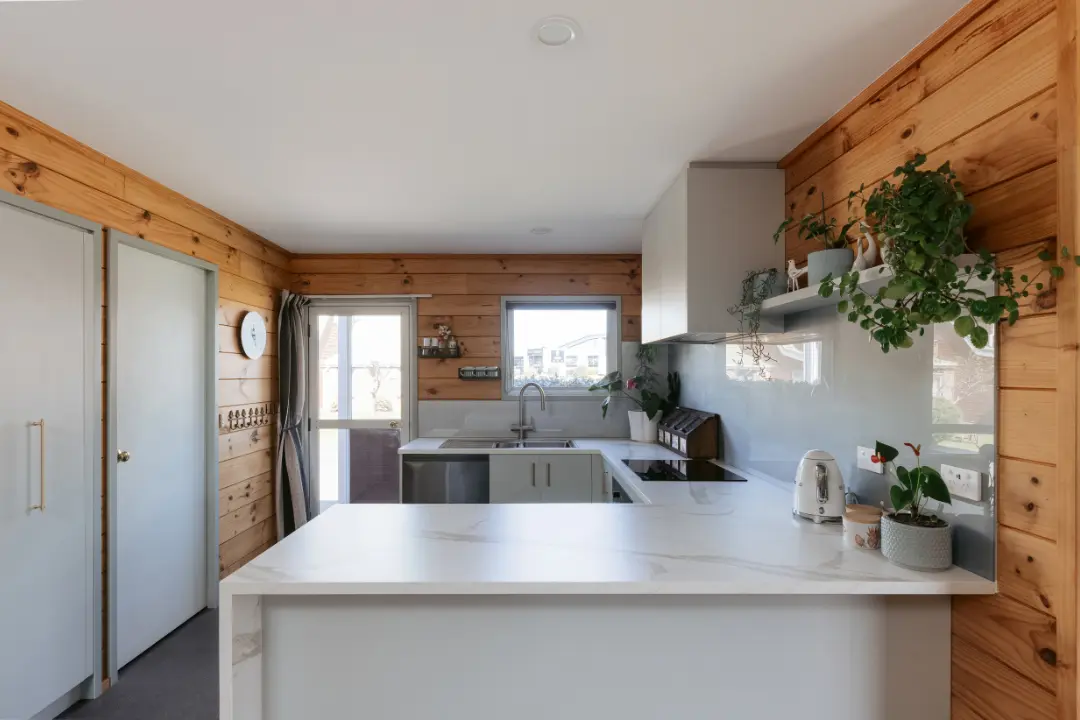
When does a laminate benchtop make sense?
Laminate is the most affordable benchtop, with a wide range of colours and designs inspired by stone, concrete and timber. It suits a kitchen, scullery, laundry or rental, where budget matters more than heat resistance.
Keep hot pans off it, and keep joins and sink cut-outs well sealed, because water can swell the core. If your kitchen has a corner, choose a non-directional pattern, because a grain or vein changes direction at the corner join.
Getting the most from a laminate benchtop.
Used well, laminate frees budget for the surfaces that work hardest. A laminate scullery can sit behind a main kitchen in engineered or sintered stone, so you spend where the benchtop is seen and used most.
The core can also be built up to the thickness you choose, with a minimum set by the benchtop’s width, and it can run down the end of an island as a waterfall. A rolled edge depends on the design coming in a postforming grade, a thinner sheet made to bend around the edge. If it does not, we finish it with a matching ABS edge instead.
Laminate substrates
| Substrate | What it is | Performance | Suits |
|---|---|---|---|
| Moisture-resistant board | A core board made to resist swelling | Holds up best where water sits | Around kitchen sinks and dishwashers, sculleries and laundries |
| Standard board | The standard core, at a lower cost | Suits dry areas away from water | Islands and benches away from the sink |
| Plywood | A layered plywood core, at a higher cost | Stronger and more stable over long spans, and also holds fixings well | Wide islands, overhangs and waterfall ends |
The minimum thickness depends on the benchtop’s width, for structural stability.
Laminate edges and finishes
| Option | Look | Performance | Suits |
|---|---|---|---|
| Edges | |||
| Rolled edge | Pencil round or bullnose front edge, postformed in one piece | Takes everyday knocks without chipping, and also has no front join for water to find | Family kitchens, sculleries and laundries |
| ABS edge | Crisp square or slightly eased edge in a matching colour | Absorbs knocks without chipping, but the edge join needs sealing well near a sink | Contemporary kitchens and sculleries |
| Surface finish | |||
| Matt | Soft, low sheen | Hides fingerprints and fine scratches | Everyday kitchen benches |
| Textured | A woodgrain or stone texture you can feel | Disguises wear, but deeper textures need a soft brush to clean | Kitchens, islands and sculleries |
| Gloss | Reflective, with brighter colour | Shows scratches and fingerprints more readily | Low-wear areas and feature benches |
Not every laminate design is available with every edge or finish.
Kitchen benchtop materials that work within your budget.
Your budget shapes every material decision from the start, rather than at the end. We listen to what you want to spend, then guide you towards materials that give the most value where it matters. A considered kitchen comes from spending well rather than spending more.
Because we care about the people we design for, we also care about their investment. Often the answer is to spend more on the surfaces you use hardest, such as the benchtop around the cooktop.
Elsewhere, though, a simpler material will serve just as well. For example, a stone or porcelain benchtop can sit above hard-wearing melamine cabinetry, and a scullery can use laminate while the main kitchen carries stone.
Pricing follows material selection, because the benchtop and cabinetry finish move the cost of a kitchen most. As a result, you will know where your money is going, and why, before we order anything.
Questions about kitchen benchtop materials.
What is the most durable kitchen benchtop material?
ranite and stainless steel are the most durable everyday benchtops, although stainless steel scratches into a patina. Porcelain and sintered stone resist heat, scratches and stains just as well, but their edges can chip with a heavy knock. Engineered stone also resists scratches and stains well. However, direct heat can damage it, so hot pans belong on a board or trivet.
Is engineered stone still available in New Zealand?
Yes. New Zealand has not banned engineered stone, although Australia banned it from July 2024. The concern is the risk silica dust poses to the people who cut it. Meanwhile, regulation here has been under review, and low-silica and zero-silica products are now available. Once it is in your kitchen, however, engineered stone poses no risk to your household.
Which benchtops suit a coastal home?
Granite, porcelain and sintered stone suit a coastal home well. Salt air and humidity do not affect them, and porcelain and sintered stone also will not fade in strong sun. Engineered stone performs well indoors, but direct sun can yellow it over time. Timber, on the other hand, needs a protective finish and regular care near the sea.
Can I mix benchtop materials in one kitchen?
Mixing often works better than one material throughout. For example, a hard-wearing surface around the cooktop and sink can sit alongside timber on an island. Similarly, the scullery can take a different stone. The materials simply need to relate in tone and thickness, so the kitchen still reads as one.
How do you look after a timber benchtop?
It depends on the finish. For example, a hi-build resin coat needs very little care beyond everyday cleaning, which makes it the practical choice around a sink. By contrast, a natural oil finish needs a maintenance coat roughly four to six times a year. In return, you can sand back and re-oil marks on site, so the timber renews over time.
Can I see samples in my own home?
Yes, for most materials. We bring engineered stone, sintered stone, timber and cabinetry samples to your home, and view them together in your own light alongside your flooring. However, granite and other natural stone are the exception. Because every slab differs, we choose it with you in person at the stone yard.
Can you work within my budget?
Yes. Your budget guides every material decision from the first conversation. We show you where spending matters most, such as the benchtop, and where a simpler material will serve just as well. We also plan the benchtop layout to make the most of each slab, which can save buying an extra one. As a result, you know where your money is going before we order anything.
What should I know before choosing a laminate benchtop?
Laminate works well in a kitchen, scullery or laundry, with a few limits. We recommend a topmount sink, because an undermount leaves the board edge exposed where water can get in. Hot pans can blister the surface and knives scratch it, and burns or deep scratches cannot be repaired invisibly. So use a trivet and a chopping board.
Begin a Design Conversation
If you are weighing up materials for a new kitchen or renovation, start by seeing them in your own home. Ideally, then do it in your own light, with someone who understands how each will perform over the years ahead.